
the day crayons quit pdf
The Day the Crayons Quit PDF: A Comprehensive Exploration
The Day the Crayons Quit offers downloadable resources in PDF format, facilitating easy access for educators and learners. These files support diverse activities,
including coloring sheets and daily tasks centered around the book’s narrative.
PDF accessibility ensures widespread usability, allowing for convenient viewing and printing of materials related to this engaging story.
Overview of the Book

The Day the Crayons Quit, penned by Oliver Jeffers, is a delightful and imaginative children’s book presented through a unique epistolary format. The story unfolds as a series of letters penned by Duncan’s crayons, each expressing their individual grievances and frustrations with their treatment. This isn’t a typical tale of colorful fun; instead, it’s a humorous exploration of feelings, perspective, and the often-unappreciated lives of everyday objects.
Each crayon boasts a distinct personality and complaint. Red feels overworked, Blue wishes for more expansive skies to color, and Purple feels consistently overlooked. The narrative cleverly anthropomorphizes the crayons, giving them voices and emotions that resonate with young readers. Duncan, the boy who owns the crayons, is presented as a somewhat oblivious recipient of these heartfelt pleas.
The book’s charm lies in its relatable themes of fairness, self-expression, and understanding different viewpoints. It’s a story that encourages empathy and invites discussions about how we treat our belongings and the feelings of others. The vibrant illustrations complement the witty text, creating a visually engaging and emotionally resonant reading experience. The PDF version allows for easy sharing and classroom use, bringing this colorful world to life for many.
The Story’s Central Conflict: Crayon Complaints
The core conflict in The Day the Crayons Quit revolves around the collective dissatisfaction of Duncan’s crayon box. Each crayon, through its individual letter, voices a specific complaint regarding its usage – or lack thereof – by Duncan. This isn’t a single, overarching dispute, but rather a chorus of individual grievances that collectively form the central tension of the narrative.
Red Crayon feels perpetually overworked, constantly tasked with coloring fire trucks and hearts, yearning for a break. Conversely, Beige Crayon feels entirely neglected, rarely chosen for any coloring task. Blue Crayon desires larger canvases than the small patches of sky he’s allotted, while Purple feels consistently overshadowed. These complaints aren’t malicious; they’re expressions of unmet needs and a desire for fair treatment.
The conflict isn’t presented as an antagonistic struggle against Duncan, but rather as a plea to him. The crayons aren’t seeking to punish him, but to communicate their feelings and request a more considerate approach to their use. The PDF format allows educators to easily highlight these individual complaints for classroom discussion, fostering empathy and understanding.
The PDF Format and Accessibility
The availability of The Day the Crayons Quit in PDF format significantly enhances its accessibility for a wide range of users. PDFs ensure consistent formatting across different devices and operating systems, preserving the book’s visual integrity regardless of how it’s viewed. This is particularly crucial for educational settings where consistent presentation of materials is paramount.
Downloadable resource sheets, provided as PDFs, offer teachers and parents convenient access to supplementary materials like coloring pages and activity prompts. These files are easily printable, allowing for offline engagement and integration into traditional classroom activities. The format also supports features like zoom functionality, benefiting individuals with visual impairments.
Furthermore, PDFs are generally compatible with screen readers, making the story and accompanying resources accessible to students with reading difficulties. The widespread availability of free PDF readers ensures that cost isn’t a barrier to accessing this beloved children’s book and its associated learning opportunities. This broad accessibility promotes inclusive education.
Educational Applications of “The Day the Crayons Quit”
The Day the Crayons Quit lends itself beautifully to diverse educational applications, extending beyond simple reading comprehension. The narrative’s core – crayons expressing their feelings – provides a springboard for exploring emotional literacy and perspective-taking with young learners. Utilizing the PDF resources, teachers can facilitate discussions about empathy and understanding different viewpoints.
The book’s epistolary format (written as letters) offers a natural entry point for teaching letter writing skills, including structure, tone, and persuasive language. Activities centered around the PDF-accessible letters encourage students to analyze and emulate the crayon’s voices. Furthermore, the story’s colorful illustrations inspire creative writing prompts and art projects.
The text also supports grammar lessons, such as identifying and correcting capitalization, punctuation, and apostrophe usage, as demonstrated in editing exercises using the PDF-provided letters. Adjective hunts within the story, facilitated by the readily available PDF text, enhance vocabulary development and descriptive writing skills. It’s a versatile tool for holistic learning.
Classroom Activities Based on the Book
Numerous classroom activities can be derived from “The Day the Crayons Quit,” enhanced by utilizing the readily available PDF version of the book. Daily activities, often presented as downloadable sheets in PDF format, provide structured learning experiences. These include focused tasks centered around each crayon’s individual complaint and personality.

Drama and improvisation exercises, as suggested in supplemental materials, allow students to embody the crayons and act out their grievances, fostering creativity and public speaking skills. Coloring sheets, frequently included in PDF resource packs, offer a calming and artistic outlet connected to the story’s themes. Craft projects, also detailed in available resources, encourage hands-on learning and artistic expression.
Furthermore, the PDF text facilitates guided reading sessions, focusing on specific skills like adjective identification and character analysis. Letter writing activities, inspired by the book’s format, can be assigned as homework, utilizing the PDF letters as models. These activities promote engagement and a deeper understanding of the narrative.
Letter Writing Activity: Crayon Perspectives
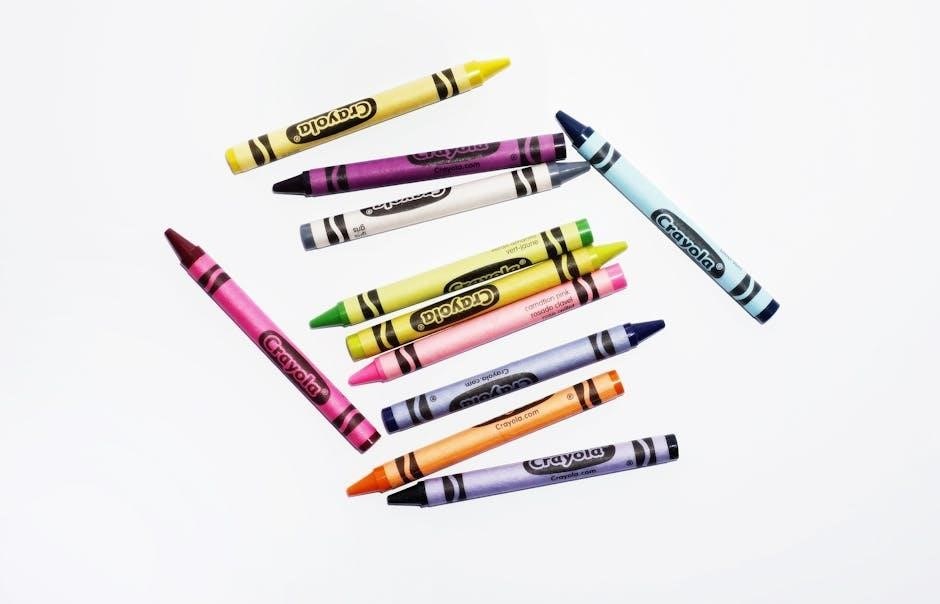
A central activity inspired by “The Day the Crayons Quit” involves students composing letters from the perspective of a crayon, mirroring the book’s epistolary format. Utilizing the PDF version of the book provides excellent models for structure and tone, showcasing how each crayon voices its concerns to Duncan.
This exercise encourages creative writing and empathy, as students must consider the crayon’s unique experiences and feelings. The PDF letters offer examples of distinct voices – Red’s assertive tone, Purple’s feeling overlooked – which students can emulate. Teachers can provide prompts, such as “Write a letter explaining why you feel underappreciated,” or “Describe a time Duncan misused you.”
The activity can be extended by having students exchange letters and respond as Duncan, fostering dialogue and perspective-taking. Access to the PDF allows for easy reference during the writing process, ensuring students capture the essence of the crayon’s voice. This reinforces understanding of character development and narrative structure.
Grammar Focus: Editing Crayon Letters
Leveraging the PDF version of “The Day the Crayons Quit” presents a valuable opportunity for focused grammar instruction. Specifically, students can practice editing skills by revising the crayon letters, identifying and correcting errors in capitalization, punctuation (full stops, commas, apostrophes), and bracket usage;

The text within the PDF provides authentic examples of writing, albeit intentionally imperfect, mirroring a child’s handwriting and occasional grammatical slips. This allows students to apply learned rules in a meaningful context; Teachers can select specific letters – like Green Crayon’s – and task students with improving clarity and correctness.
This activity reinforces understanding of grammatical conventions and encourages attention to detail. Students can work individually or collaboratively, comparing their edits and justifying their choices. The PDF format allows for annotation directly onto the document, making the editing process interactive and visual. It’s a practical application of grammar skills, grounded in a beloved story.
Adjective Hunts within the Text
Utilizing the PDF of “The Day the Crayons Quit” provides a fantastic platform for adjective identification practice. Students can embark on an “adjective hunt” throughout the crayon letters, actively searching for descriptive words that bring the characters and their complaints to life.
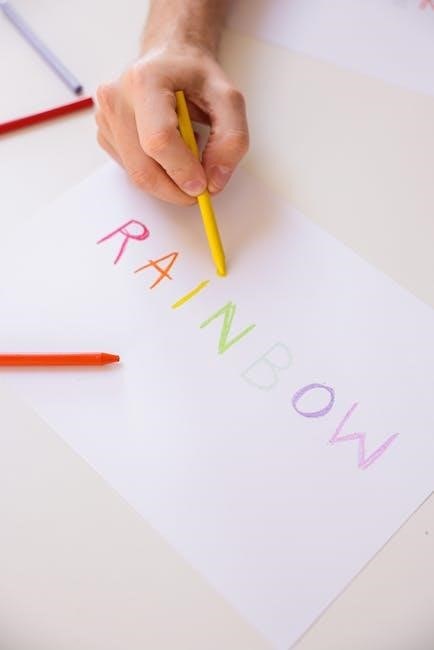
This activity, as suggested by resources like Twinkl, encourages close reading and enhances vocabulary. The PDF format allows students to highlight or annotate the adjectives directly within the text, making the learning process interactive and visually engaging. Focusing on adjectives helps students understand how authors use language to create vivid imagery and convey emotion.
Beyond simple identification, students can discuss why specific adjectives were chosen and how they contribute to the overall meaning of each crayon’s letter. This fosters critical thinking and a deeper appreciation for the nuances of language. The readily available PDF ensures consistent access to the text for all learners.
Character Analysis: Individual Crayon Grievances
The PDF version of “The Day the Crayons Quit” is invaluable for detailed character analysis, specifically examining each crayon’s unique grievances. Each letter, readily accessible within the PDF document, presents a distinct personality and complaint from Duncan’s colorful tools.
Students can analyze the tone and language used by each crayon to infer their feelings and motivations. For example, Red Crayon’s capitalized demands reveal frustration, while other crayons express feelings of neglect or overuse. The PDF allows for easy comparison of these different perspectives.
This analysis extends beyond simply identifying the complaints; it encourages students to consider why each crayon feels the way it does. What specific actions of Duncan have led to their dissatisfaction? The PDF format facilitates close reading and annotation, enabling students to document their observations and interpretations effectively. Understanding these individual grievances fosters empathy and critical thinking skills.
Red Crayon’s Letter: A Detailed Look
Within the “The Day the Crayons Quit” PDF, Red Crayon’s letter stands out due to its assertive and demanding tone. The PDF allows for a focused examination of the letter’s stylistic choices, notably the extensive use of capitalization – “HEY DUNCAN,” “WE NEED to talk!” – which immediately conveys Red’s frustration and sense of urgency.
Analyzing the PDF text reveals Red’s primary grievance: being consistently relegated to coloring only apples and hearts. This limited usage feels demeaning and stifles Red’s creative potential. The letter’s direct address to Duncan, coupled with the imperative “WE NEED to talk,” highlights Red’s desire for change and recognition.
The PDF format enables students to easily identify key phrases and analyze their impact. Red’s letter serves as a powerful example of how language can be used to express strong emotions and advocate for one’s needs. Close reading of the PDF text fosters a deeper understanding of Red’s character and the underlying themes of the story.
Purple Crayon’s Perspective and Discussion Points
The “The Day the Crayons Quit” PDF presents Purple Crayon’s complaint as a matter of being overworked and ultimately, worn down. Unlike Red’s assertive demands, Purple’s letter expresses exhaustion, having been tasked with coloring everything purple – from grapes to dragons! The PDF facilitates a discussion about fairness and the importance of varied creative outlets.
Examining the PDF text prompts questions: Is it reasonable for Duncan to rely so heavily on one crayon for a specific color? Does Purple’s perspective highlight the importance of appreciating each crayon’s unique abilities? The PDF’s accessibility allows for easy annotation and collaborative analysis of Purple’s grievances.
Discussion points stemming from the PDF include exploring the concept of burnout and the need for balance. Purple’s plight encourages empathy and consideration for others’ limitations. The PDF resource supports a nuanced understanding of Purple’s feelings and the broader themes of self-care and responsible usage.
Coloring Activities and Creative Expression
The “The Day the Crayons Quit” PDF readily lends itself to vibrant coloring activities, extending the book’s creative spirit. Many downloadable resources, available in PDF format, feature coloring sheets depicting the crayons themselves, or scenes inspired by their letters to Duncan. These sheets encourage children to explore color choices and artistic expression.

Beyond simple coloring, the PDF’s themes inspire more complex creative tasks. Students can design “apology” pictures for the crayons, illustrating how Duncan might demonstrate better care. The PDF’s accessibility allows for easy printing of blank templates for these extended projects.
Furthermore, the PDF can spark discussions about color symbolism and emotional responses to different hues. Activities could involve coloring based on feelings – what colors represent happiness, sadness, or anger? The PDF resource fosters a holistic approach to art, blending storytelling with hands-on creativity and self-expression.
Drama and Improvisation Inspired by the Story
“The Day the Crayons Quit” PDF provides a fantastic springboard for dramatic play and improvisation exercises. The crayons’ distinct personalities, as revealed in their letters (often found within the PDF resources), offer rich characterizations for students to embody.
Improvisation scenarios could involve a “crayon tribunal,” where students, in character, debate Duncan’s crayon usage. The PDF’s narrative structure – a series of complaints – naturally lends itself to this format. Alternatively, students can improvise scenes depicting Duncan’s interactions with each crayon, responding to their grievances.
The PDF’s themes of fairness and perspective-taking can be explored through role-playing. Students might act out Duncan writing replies to the crayons, demonstrating empathy and understanding. Downloadable resources often include suggested drama games and activities, enhancing the theatrical experience. This fosters collaboration, communication, and creative problem-solving, all inspired by the story’s core message.
Craft Projects Related to the Crayons
Utilizing “The Day the Crayons Quit” PDF as inspiration, numerous craft projects can enhance engagement with the story. A simple yet effective activity involves creating oversized crayon replicas from construction paper or cardboard tubes, mirroring the book’s illustrations.
Students can design “crayon boxes” decorated with the individual crayon personalities, referencing details from the PDF’s text. Further, crafting individual crayon portraits – depicting each crayon’s feelings through artistic expression – encourages deeper character analysis.
The PDF’s narrative lends itself to creating “wanted” posters for Duncan, from the crayons’ perspective, playfully highlighting his perceived offenses. Downloadable coloring sheets (often included in PDF resource packs) can be expanded upon with mixed-media techniques. These projects foster creativity, fine motor skills, and a tangible connection to the story’s themes, bringing the crayons’ world to life beyond the page.

Valentine’s Day Context within the Narrative
Within “The Day the Crayons Quit,” Valentine’s Day serves as a pivotal plot point, specifically highlighted in the Green Crayon’s letter, readily accessible within the PDF version of the book. The Green Crayon expresses frustration at being consistently relegated to coloring only stems and leaves, and specifically, Valentine’s Day hearts.
This detail, found within the PDF’s text, sparks discussion about fairness and the limitations placed upon individual expression. It provides a relatable context for young readers, connecting the story to a familiar holiday. Analyzing the Green Crayon’s complaint encourages empathy and critical thinking about expectations.
Teachers utilizing the PDF can extend this theme with Valentine’s Day-themed art projects, prompting students to consider alternative uses for colors and challenge conventional representations. The narrative’s focus on the Green Crayon’s Valentine’s Day duties offers a unique lens through which to explore the holiday’s symbolism and potential for creative reinterpretation.
Analyzing Crayon Usage and Duncan’s Habits
Examining “The Day the Crayons Quit,” particularly through the readily available PDF format, reveals patterns in Duncan’s crayon usage and highlights his coloring habits. The letters from the crayons detail specific grievances, painting a picture of a child with distinct preferences and, arguably, a lack of consideration for his art supplies.
The PDF’s text showcases how Duncan frequently favors certain colors – notably Red – while consistently overlooking others, like the neglected Beige Crayon. This analysis encourages students to infer Duncan’s personality and consider the impact of his choices on the crayons’ feelings.
Discussions centered around the PDF can explore whether Duncan’s habits are typical of children or if he demonstrates a particularly strong bias. Furthermore, analyzing the types of objects each crayon is asked to color reveals insights into Duncan’s interests and the themes prevalent in his artwork. This fosters observational skills and critical thinking.

Handwriting Practice and Cursive Skills
Utilizing the “The Day the Crayons Quit” PDF provides excellent opportunities for handwriting practice, particularly focusing on cursive skills. The letters penned by each crayon offer authentic models for students to emulate, observing letter formations and spacing.
The PDF’s content allows teachers to assign tasks where students rewrite portions of the crayon letters, concentrating on neatness and legibility in cursive. This reinforces proper penmanship while engaging with the story’s narrative. Specific exercises can target areas like capitalization, punctuation – full stops, commas, apostrophes, and brackets – as demonstrated within the letters.
Furthermore, students can practice forming letters consistently, mirroring the style of the crayon’s handwriting. Encouraging neat cursive work, as suggested in accompanying daily activities, prepares students for more formal writing assignments. The PDF serves as a contextualized and motivating tool for developing essential handwriting skills.
Twinkl Resources and Lesson Planning
Twinkl offers a wealth of resources designed to complement “The Day the Crayons Quit,” readily available and often in PDF format, streamlining lesson planning for educators. These resources encompass guided reading sessions, specifically a four-part series focusing on the book, providing structured learning experiences.
The PDF materials from Twinkl include targeted activities like adjective hunts within the text, encouraging close reading and vocabulary development. Lesson plans are meticulously crafted, covering aspects like size, looks, and feelings, fostering comprehensive comprehension. These resources align with Year 2 English curriculum objectives.
Teachers can access pre-prepared worksheets and prompts, saving valuable time in preparation. Twinkl’s offerings extend beyond core literacy skills, incorporating drama games, improvisation exercises, coloring sheets, and craft projects, all linked to the story’s themes. Utilizing these PDF resources enhances engagement and caters to diverse learning styles, making “The Day the Crayons Quit” a versatile teaching tool.
Exploring Feelings and Emotions of the Crayons
“The Day the Crayons Quit,” presented often as a downloadable PDF, provides a rich platform for exploring emotional literacy. Each crayon’s letter reveals distinct feelings – frustration, neglect, underappreciation, and a desire for recognition. Analyzing these letters allows students to identify and articulate a range of emotions.
The narrative encourages empathy as children consider the crayons’ perspectives. Discussion points can center around why the purple crayon feels overlooked or why the red crayon feels overused. Examining the crayons’ grievances fosters understanding of how actions impact others’ feelings.
PDF-based lesson plans can incorporate activities where students role-play the crayons, expressing their emotions through drama and improvisation. Further exploration involves identifying the reasons behind the feelings, promoting emotional intelligence. This book, easily accessible in PDF form, offers a relatable and engaging way to discuss complex emotions with young learners, building social-emotional skills.